Country information
Somaliland is an unrecognised self-declared de facto sovereign state that is internationally recognised as an autonomous region of Somalia. The government of Somaliland regards itself as the successor state to the British Somaliland protectorate, which was independent on June 26, 1960 as the State of Somaliland. Somaliland is bordered by Ethiopia in the south and west, Djibouti in the northwest, the Gulf of Aden in the north, and the autonomous Puntland region of Somalia to the east.
In 1988, the Siad Barre regime committed massacres against the people of Somaliland, which were among the events that led to the Somali Civil War. The war left the economic and military infrastructure severely damaged. After the collapse of the central government in 1991, the local government, led by the Somali National Movement (SNM), declared independence from the rest of Somalia on May 18 of the same year. Since then the territory has been governed by an administration that seeks self-determination as the Republic of Somaliland. However, Somaliland’s self-proclaimed independence remains unrecognised by any country or international organisation.
Somaliland Statistics (2008)
Population: 3.5 million
Areas: 68,000 sq miles
Capital: Hargeisa
Language: Somali, Arabic, English
Religion: Sunni Islam
Ethnic Groups: Somali, Swahili, Oromo
The population is estimated at 3.5 million, with an average growth rate of 3.1%.
55% of the population is nomadic or semi-nomadic, with 45% living in urban areas or rural towns. The average life expectancy for males is 50 years old, and for females 55. The population is dispersed in Hargeisa, the capital city, and other main towns and cities such as Burao, Borama, Berbera, Erigabo, Gabiley, Baligubadle, Saylac, Odeweyne, and Las Anod.(Unrepresented Nations and Peoples Organization http://www.unpo.org/members/7916 March 25 2008)
Maternal Mortality is amongst the highest in the world with 1200 deaths per 100,000 live births. (State of the World’s Midwifery. UNFPA 2011).
The prevalence of mental illness in Somaliland is thought to be the highest in the world. It is estimated that at least one person has some form of mental illness in every two households though there is no accurate data collected in the entire country except in Hargeisa.
Somalland Diaspora Communiy
The Somali presence in Wales goes back well over a hundred years and has been concentrated, until recently, in the old docklands of Cardiff.
Early settlers were predominantly male whose main source of employment was the sea in Cardiff’s heyday as a major international seaport The early 1980s brought another arrival of Somalis, who were fleeing from the Civil War in the Horn of African. It is estimated that currently over 8000 Somalis Live in Cardiff, Newport and Swansea making them the largest ethnic minority community in Wales.
The vast majority of Somalis in Wales hail from what was formerly British Somaliland. The protectorate gained independence as the State of Somaliland on 26 June 1960.
Days later, it joined with Italian Somaliland, to form a new Somali Republic (Somalia) on 1 July 1960. The Government of Somalia collapsed to clan militias in 1991 and has been without stable government ever since. Somaliland declared independence in on 18 May 1991.
Background Information of Hayaat Women Trust and Somaliland Link Visit
As part of women in large Diasporas Somaliland community in Wales we had been involved in contributing the development of the home country Somaliland for a long time. We took part in many of development projects which had been established in the country since its independent over twenty years ago. We fund raised for the building of Universities, Roads, Hospitals, schools and improving other basic services.
There are few active Somali Community Organizations, but we never had women lead International Organizations in Cardiff. In September 2011 group of us decided to form Hayaat Women Trust, we set up this organization so we can have something structured to take part in developing the country specially to empower women and help them to improve their health and education. Since our launch we also took parts few projects regarding health of the African women in Wales, we organised number of events and activities. These events and activities were jointly organised with other partner organisations around different themes affecting the community and have been attended by people from different backgrounds and nationality that have benefited attending
On March 8th 2012 Hayaat Women Trust held Personnel Development Awareness event, Cardiff lifelong Centre and community 1st helped us in organising and planning the event. Talks and presentations on family welfare reform and opportunity for learning and up skilling were delivered by representative of different organisation, e.g. Cardiff University, Job Centre Plus and Communities First. In addition Cardiff University Lifelong Department displayed information regarding their widening access courses and conducted a survey with the communities of the courses they are interested in doing and the areas of learning that will benefit the community.
The event was a women only event in order to remove any cultural barriers that will make it difficult for women attending and encourage women from all sections of the community to participate especially those from hard to reach communities. Over 60 women attended, which have impact as more women registered attending a widening access course in the university. More courses have been deigned catering for their need, e.g. childcare course, and the timing for the course has been changed to fit around women responsibilities and availability that result in the courses been undertaken.
We also organized number of Health Awareness programmes including our last event about Mental Health which took place 10th October 12 the World Mental Health Day.The event was organised jointly with Mind Cardiff and Cardiff and Vale Mental Health Service, it was an educational event where more people became aware of the importance of encouraging the community in working towards stopping the stigma of people with Mental Health difficulties.
End of last year Hayaat Women’s Trust was successful in securing a grant from the Wales for Africa Community Links Fund to cover the costs of a visit by one of the Somali women in management committee of the group and a mental health nurse. We also had a request from Life for African mothers who are one of our partner organizations in Wales to join with us the visit, Angela Gorman who is CEO of the Organization came with us after her Trustees agreed to cover her visit expenses.
Visiting Team
Fowzia Ai – Chairperson Hayaat Women’s Trust in Cardiff.
Maria Granville – Deputy Ward Manager Llandough Mental Health Unit, Cardiff and Vale ULHB and also member of Hayaat Link Group.
Angela Gorman – CEO Life for African Mothers.
Please find attached report written by Angela Gorman CEO – Life for African Mothers who accompanied us in the visit.
Objectives for visit.
- To visit and undertake a needs assessment in order to explore the possibility of a link between Hargeisa Group Hospital’s Mental Health Unit and Cardiff & Vale Mental Health Services, facilitated by the Hayaat Women’s Trust.
- To visit and meet Women Groups in Hargeisa, Somaliland and rural areas near the capital to form a partnership agreement.
- To meet with the Ministry of Health and any other stakeholders involved with improving health provision.
- To strengthen communication with the Somaliland Nursing and Midwifery Association led by Mrs Fouzia Ismail whom we met and form a link during her visit in Cardiff .
- To hold an event in order to raise awareness of both health issues, that of mental health needs and maternal health with local media, business leaders, Local Groups and the general public.
- To meet local communities and discuss with them their needs and how we can work together in future and learn from each other.
Programme.
The outward journey was not without problems, with airline changing the departure time from Addis Ababa leading to an 8 hr wait before flying onto Somaliland. Additionally, the airport at Hargeisa is being rebuilt, so flights are currently arriving in Berbera which is around 3 hrs by road, from the capital. The team made a brief visit to Berbera Hospital to meet the Director, before finally arriving in Hargeisa at 10pm on Tuesday 4th December instead of at 10am as originally planned. Wednesday 5th December. A meeting with the Somaliland Nursing and Midwifery Association was the first appointment. The group then visited Hargeisa Group Hospital where we met the Director and were shown around the hospital and in particular the maternity unit where we donated two suitcases of baby clothes.
The labour ward was clean and seemed to be well resourced. The mental heath unit was the final stop and it was clear that major work was needed to improve the environment for the patients. The team met with the senior staff and were told that they had received no training in the care of patients with mental illness, particularly the management of violent patients and how to protect themselves. One member of staff had returned to work following a serious assault when her skull was broken, leaving her with a significant scar and facial disfigurement. The group spent a long time at the unit, talking to patients and viewing the now unused ward for which the UK Diaspora Somali community are funding a refurbishment. The kitchen which serves the mental health unit was truly shocking in its current state, with food being prepared on the floor and staff doing their best in the worst possible situation.
Thursday 6th December….
We met with Mrs Fouzia Ismail Chief Executive Somaliland Nursing and Midwifery Association, Fouzia told us that she was pleased to meet with us then she gave us a brief report of her Association and the work they do in the country, she also informed us the maternal problems in the country and gave us her Association’s profile, Fouzia told us that she is happy to work with us and take further our link in delivering appropriate projects specially Education and Training Programmes for the women. We then went to a meeting with representatives of THET (Tropical Health Education Trust) had been arranged by Mrs Fouzia Ismail, where the logistics of having a link with Somaliland was explained in detail. The current funding is time limited and at the moment, the longer term provision has not been secured. From THET, the team visited an organisation called IPS, which is working to reduce maternal mortality and has provided support with both medication and Training for the staff to a limited number of maternity units in Somaliland. They were very interested to hear about our Organisation and how we would like to help Somaliland in the Maternal Health Campaign to reduce high numbers of women dying in pregnancy and childbirth. We discussed the need for Training programmes for Local Birth Attendees and community midwifes and health Awareness meeting. On the way back to the accommodation, the team visited an orphanage which houses almost 100 children including 18 babies, one of whom was brought to the orphanage at 3days of age.
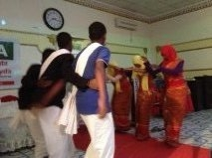
Meetings were arranged for the weekend, so the team had a “day off” part of which was spent with Fatima Ibrahim-ex Wales Diaspora who moved back to Somaliland over ten years, she provided lunch and relaxation ahead of a very full and eventful week. Fatima currently runs Youth Charity Projects, she updated us about her Organisation and their latest activities in youth empowerment programmes, later that evening we attended previously arranged Awards ceremony where Fatima’s Organisation called ODHA( Office of Development and Human Rights Affairs) were giving out Achievement Awards to group of young high school graduates who completed confidence building Training Programme, there were young Somali Folk dancers who performed to entertain the guest of the programme.
Saturday 8th December…we met with the Minister of Health and his Deputy who were very grateful for the Somaliland Diaspora’s contributions of their country and for the proposal to link the mental health units.
Dr Hussein Muhumad Mohamoud expressed grave concern about the child mortality rates which are amongst the highest in the world with 50% of deaths being neonatal, emphasising the fact that training and resources were desperately needed. The Health Minister agreed to provide a letter of support to our Organization he hopes will help with obtaining resources. (letter attached to this report.) From the Ministry, the team visited the local TV station and spoke to their Director who agreed to help with coverage of the fund and awareness raising event which was planned for Wednesday 12th December. A visit to the market then followed for some early shopping for unusual gifts, thus helping the local economy.
Sunday 9th December…we met with the United Nations Population Fund (UNFPA), a wing of the UN which is mainly concerned with maternal/reproductive and child health. The UNFPA is trying to attract appropriately experienced obstetric staff to provide skills training and support to local staff. The representatives were informed about the awareness raising event on Wednesday 12th and agreed that one of their staff would attend. The afternoon was spent planning the programme for the event and contacting significant individuals, before being taken to the National TV station to take part in a programme which will be transmitted worldwide to Diaspora Somali communities via cable TV. The programme lasted 40mins and the team were able to give a very honest and detailed account of their impressions so far.
Monday 10th December…an invitation to visit Salahley Hospital had been received prior to the team’s arrival.
Given the need for an armed guard for visits outside the capital we were offered the use of the Minister of Health’s vehicle, driver and armed guard. The village and hospital are around 90mins from Hargeisa, but for most of the journey, the roads were little more than a dried up river bed. As we were thrown around the vehicle, I couldn’t help thinking that as bad as it was for us, how awful it would be for a woman in labour! At the village, we met with the local Health Officer, a nurse who has acquired skills out of necessity. We toured the health centre. One of the reasons we had been asked to visit Salahley, was that two years ago, a woman died in childbirth and in realising that she was going to die, asked that something be done to prevent this happening again. Funds were raised from the U.K Diaspora community and a new hospital has been built 1km from the village, at the exact spot where she died. The building has not yet been equipped. During the visit we met with the village elders and women group to discuss their needs. They told us that there is not enough health workers in the village also told us their concern of women and young girls lack of education, they also mentioned the problems with FGM and current activities of the community organisations which work in the village before returning to Hargeisa.
Tuesday 11th December…we visited Gabiley Hospital which is approximately 45mins from Hargeisa and was built using funds raised by the UK diaspora community. The clinical areas were clean and organised, but quiet! The junior doctor, who showed us around, informed us that they are pleased with our visit and hope that we will be back again to help them develop the Hospital and their staff specially women health workers. The team were pleased to hear that the plan for the next stage of the hospital development is to build a mental health unit and we were shown the spot where the building would be erected. On our return to our accommodation, a meeting took place with a Consultant Paediatrician who was referred to us by Fouzia Ismail. The request from the doctor was that we assist with bringing appropriately experienced clinicians to help with training, thereby reducing the neonatal mortality rate which as already stated is among the highest in the world.
Wednesday 12th December…the team stayed in and around the hotel as preparations, such as fine tuning presentations continued for the evening event. A chance meeting with the Minister for Presidential Affairs allowed the question on women to be asked. We were told that there is work going on within the government, but the Regional elections had delayed progress. The fund and awareness raising event was well received although some sensitive issues related to mental health and maternal health were raised and discussed. There was a mixed audience, with the men sitting in groups. They were asked directly, “If 300,000 men were dying every year, would someone have sat up and done something?” It took some time for the men to respond…most nodding their heads. We delivered mental health awareness presentation which has been translated in to Somali language as well. Representatives from Local Organisations who provide services to people with mental health problems and their carers Gavo(General Assistance and Voluntary Organisation) and GRT(Italy based NGO) also spoke at the event, both speakers talked about the current mental health situation of the country and their latest projects, Abdirashid from Gavo mentioned that the situation of the mentally ill people is further worsened by the fact that Somali people believe that once a person becomes mentally ill, he will never recover. A Somali proverb says mentally ill person can only get better but can never recover ( nin waashay wuu ladnaaday mooyee wuu bogsaday maleh) supports the notion that if one become mentally ill once in a life time then the chances of him or her recovering is slim. This concept furthers the isolation and lack of consideration for the mentally ill in the country. Even though there is high prevalence of mental illness and pitiable conditions of mentally ill people in Somaliland, there is neither a strategy nor a policy set out by the authority to deal with the problem.
Thursday 13th December…the team visited the Nagaad Network which is an umbrella Organisation that encompasses groups who deal with women’s issues. Nafisa Yusuf leader of Nagaad presented moving presentation about their work and all the improvements they made since they formed this Network Organisation, we had lengthy discussions about women and issues concerning them plus how vital it is for Organisations to work together to improve the basic services including Health and Education. They then travelled to the Edna Adan Hospital and met the inspiration behind the hospital for which Edna helped to mix the concrete. The hospital started as a maternity unit but has now grown to incorporate general wards which we were shown around.
Friday 14th December…packed and left the hotel by 5.15am as we had to travel to Berbera to catch the flight home…as we thought! The reality of an airport which cannot cope with the volume of passengers was brought into sharp focus and having been given misinformation about the time we needed to arrive at the airport, the need to have every inch of baggage searched because the x-ray machine was broken, a dispute with the airport authorities about whether we needed to pay $34 to leave the country, all left us being told that the flight had closed, minus us and our luggage. The airline put us up in a nearby hotel and we flew back to the UK on the night of Saturday 15th December.
Summary of conclusions.
The team was able to put together a good picture and understanding of the situation for people with Mental Health problems and the Maternal Health situation in the country.
- The Team met women groups, local elders, local young people and Orphanage Centre and hear from them their needs and how they prioritise it.
- Hayaat Women Trust signed MOU with SLNMA and Gudoon Women Organization also possible link with Hargeisa Mental Hospital and Cardiff and Vale Mental Health Department were discussed and could be finalize with another visit which can be facilitated by Hayaat Women Trust.
- The appropriate stakeholders were met and have agreed that co-operation to address the problems of maternal/neonatal mortality rates is the way forward.
- Attendance at the event on 12th December could have been better but it will be down to the actions by those attending either by facilitating and/or donating to the causes which will be the marker for its success.
Written by: Angela Gorman and Maria Granville